
Why You Crash at 3pm: Blood Sugar, Hormones & Fatigue
Part 2 of 3 in the Insulin Resistance Series
This has easily been one of the most common conversations I've been having in clinic lately.
Women are doing all the right things - they are eating well, staying active, trying to look after themselves -and yet almost like clockwork, they hit a wall around 3pm.
Energy drops. Focus disappears. Cravings kick in. And suddenly that second coffee or something sweet feels non-negotiable.
It's easy to brush this off as a busy day or poor sleep the night before.
But more often than not, this mid-afternoon slump can be a sign your blood sugar isn't as stable as it could be. Though it's rarely the only thing going on….
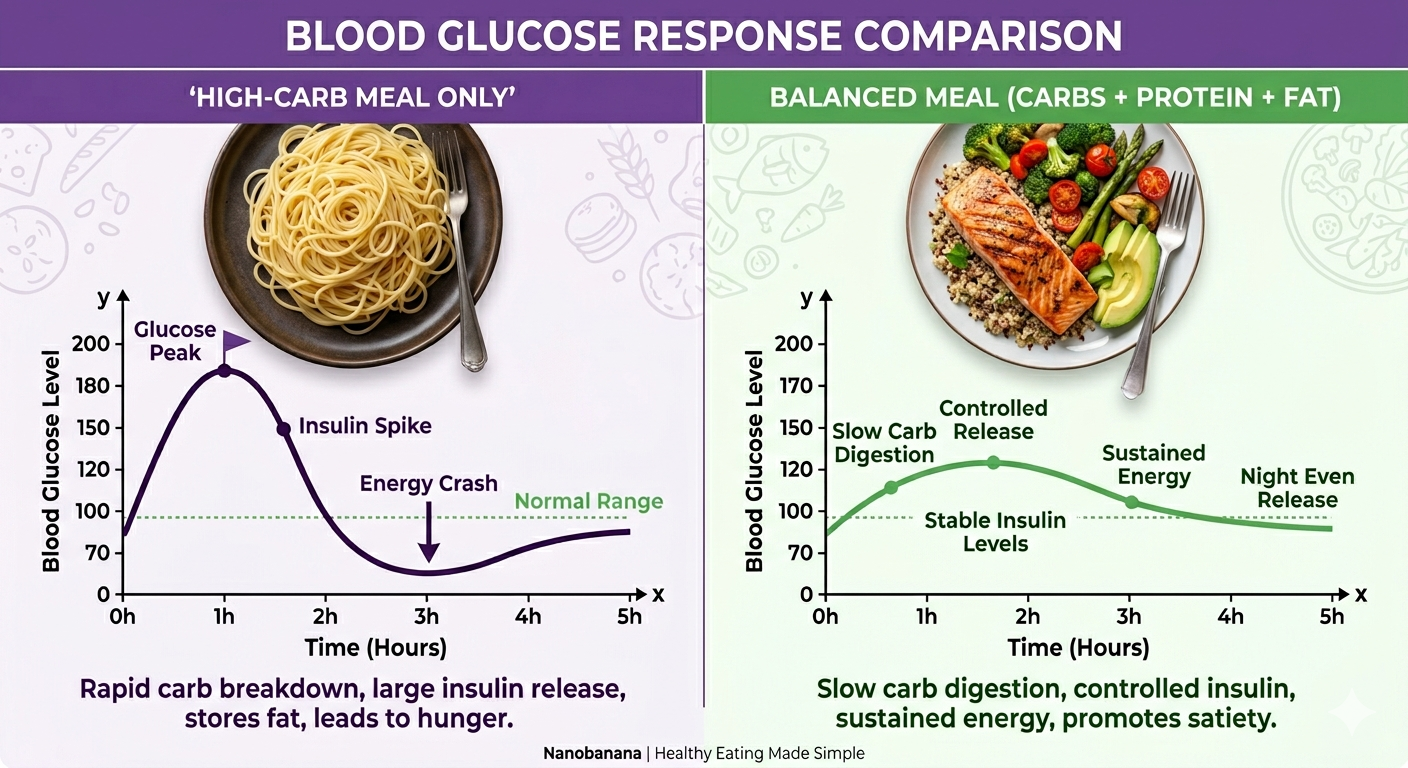
What the Image Above Is Showing You
If you look at the infographic above, you'll see exactly what I mean.
On the left, a high-carbohydrate meal causes a rapid spike in blood sugar, followed by a sharp drop. This is the kind of crash many women feel mid-afternoon.
On the right, a more balanced meal (with protein, fats and carbohydrates) leads to a slower, more stable rise in blood sugar, resulting in sustained energy.
For some women, a 3pm crash can reflect exactly this pattern playing out earlier in the day, particularly after a high-refined-carb lunch. It's worth knowing that blood sugar is just one piece of the puzzle, alongside sleep, stress, meal size, and your natural circadian rhythm.
What's Actually Happening at 3pm
Every time you eat, your blood sugar rises.
In response, your body releases insulin to move that glucose out of your bloodstream and into your cells for energy.
When this system is working well, your energy stays steady.
But if your blood sugar rises too quickly, even from foods that seem "healthy", insulin can overcorrect, causing blood sugar to drop too low. This is sometimes called reactive hypoglycaemia, and it can happen within a few hours of eating.
That drop is what you feel as:
Fatigue
Brain fog
Irritability
Sugar cravings
Your body is simply trying to bring your energy back up as quickly as possible.
(And yes - the normal circadian dip that happens in the early afternoon can amplify all of this, which is why 3pm tends to be the magic hour for so many women.)
Why This Gets Worse After 40
This is where hormones start to play a bigger role.
During the menopausal transition, changes in estrogen may influence glucose regulation and insulin sensitivity. However the relationship varies from person to person and is still an active area of research. What we do know is that many women notice a shift in their energy, cravings and metabolism during this time, and blood sugar regulation is often part of that picture.
Now lets add on top of that:
Cortisol (your stress hormone): Stress hormones like cortisol can raise glucose and alter how insulin works, especially around meals, meaning higher stress levels can make blood sugar swings more likely.
Muscle mass: Skeletal muscle plays a major role in glucose disposal. Resistance training is one of the most well-supported strategies for improving insulin sensitivity as we age, and it's something I'm a huge fan of for women in perimenopause.
This is why what worked in your 30s suddenly doesn't feel like it's working anymore. Your body hasn't failed you - it's just working differently, and it needs a different kind of support.
Signs Your 3pm Crash May Be Blood Sugar-Related
If this is happening regularly, you may notice patterns like:
Needing coffee or sugar to get through the afternoon
Feeling shaky, irritable or foggy
Grazing or snacking constantly after lunch
Feeling "wired but tired" later in the day
Getting a second wind at night
These aren't random symptoms — they're signals worth paying attention to.
A Quick Easter Reality Check
And since it's Easter this week… let's be honest, there's probably more chocolate around than usual.
This isn't about avoiding it (because that's not realistic, or enjoyable).
But it is about how you eat it.
Chocolate, like any higher-sugar food, tends to affect your blood sugar more when eaten on an empty stomach or grazed on all day. The overall composition and timing of what you're eating matters more than any single food.
A few simple tweaks can make a real difference:
Have chocolate after a meal, not on its own
Pair it with protein or fat
Avoid the "all day picking" pattern
Sit down and enjoy it, rather than eating on the run
Your metabolism can absolutely handle chocolate… it just prefers not to be ambushed by it all day (GRIN)
How to Reduce the 3pm Crash
The goal isn't perfection — it's stability.
Simple strategies that support blood sugar balance include:
Starting your day with protein : This sets your blood sugar up for the whole day. Aim for 30gms as a starting point
Building balanced meals : Protein + healthy fats + quality carbohydrates that have fibre in them - i.e plenty of vegetables!
Being mindful of long gaps between meals : Though this is individual; some women do well with fewer, larger meals, while others feel better eating more regularly
Incorporating resistance training : Genuinely one of the most powerful tools for glucose regulation
Being mindful with caffeine : especially on an empty stomach, which can amplify cortisol and affect blood sugar
Small, consistent changes here can have a significant impact on your energy, your mood, and how you feel in the second half of the day.
The Bigger Picture
If you're experiencing regular energy crashes, cravings or stubborn weight gain, these patterns are often connected, and they're worth investigating properly.
In my previous post, I talked about the early signs of insulin resistance and how they often go unnoticed. And in the next post, I'll be breaking down how blood sugar, cortisol and fat storage all connect, particularly when it comes to belly fat after 40.
Coming Up Next in This Series
In Part 3, we're going deeper into something I hear about constantly in clinic: why belly fat seems to appear (or stick around) after 40, no matter what you do. I'll be breaking down the connection between blood sugar, cortisol and fat storage, and why the usual advice of "eat less, move more" so often misses the mark for women in this stage of life.
Ready to Understand What's Driving Your Symptoms?
If you're reading this and recognising yourself in these patterns, a great place to start is figuring out what's actually going on under the surface. Head to the Metabolism Detective Quiz on my website. It takes just a few minutes and helps you pinpoint whether blood sugar, hormones, stress or something else might be at the root of how you're feeling.
Here’s the link: https://www.lisascarfonaturopath.com/metabolism-detective