
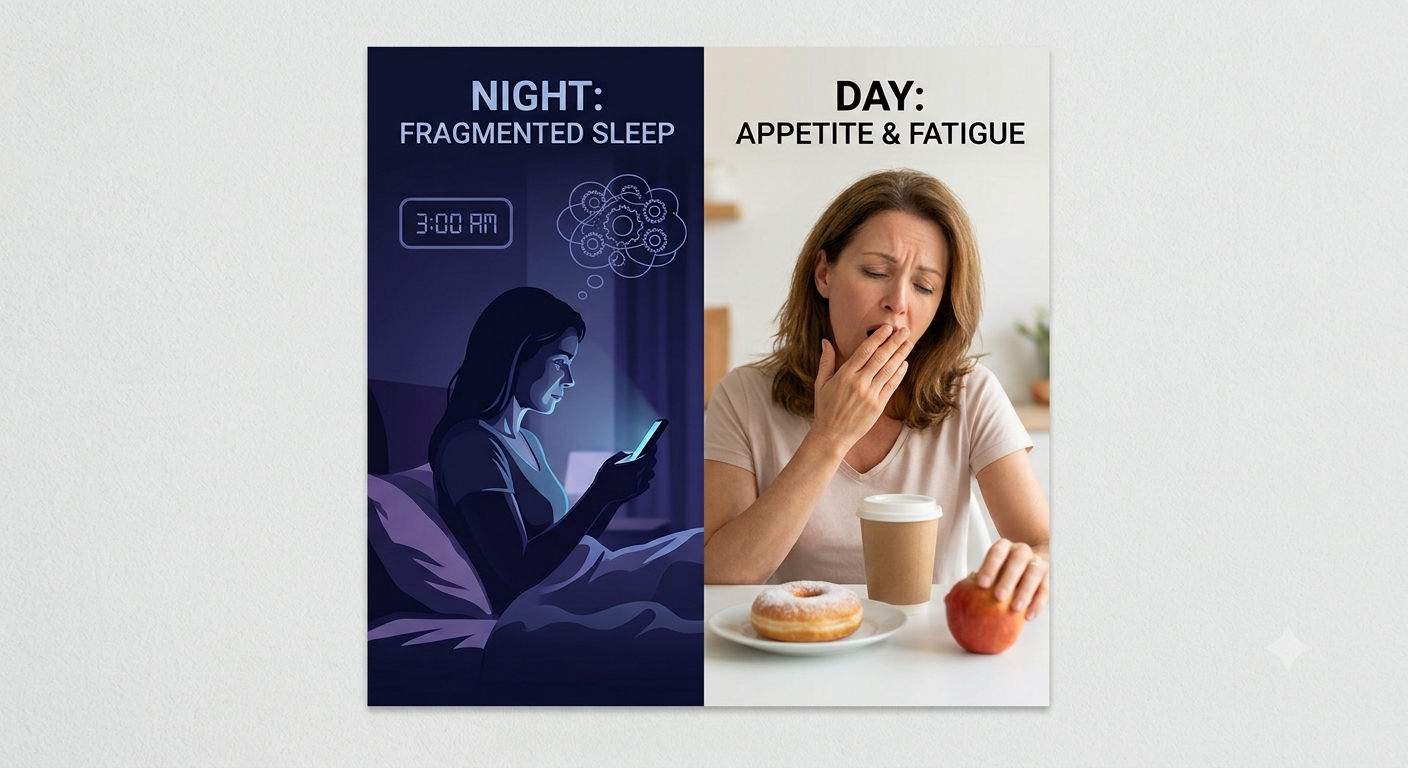
If you're eating well, moving your body, and still watching the scales refuse to budge, for some women, sleep may be a major missing piece, alongside food, movement, and stress.
Sleep isn't just rest. It's a key input into your metabolic health. And when it breaks down, it can make weight management feel far harder, no matter how "good" you're being.
Why Sleep and Weight Are Linked
Research consistently shows that short or poor-quality sleep is associated with higher obesity risk and poorer weight-loss outcomes, including reduced fat loss during calorie restriction and higher energy intake when sleep is cut short.
Part of what's going on: poor sleep can alter cortisol rhythm, often increasing evening cortisol or flattening its natural daily pattern. Sleep restriction has also been shown to reduce insulin sensitivity and shift appetite regulation, with many studies finding increased hunger and a pull toward energy-dense foods.
Cortisol may then contribute to higher glucose availability and, over time, greater central adiposity risk, particularly when sleep loss is chronic. And weight gain, metabolic strain, and sleep disruption appear to reinforce each other in a bidirectional loop, rather than one simply causing the other in a straight line.
It's not a willpower problem. It's physiology, and it runs in both directions.
Where This Often Starts (And Why It's Missed)
In clinic, I see this pattern often, and it usually starts earlier than women expect. Many of my clients' sleep issues first show up in perimenopause, when fluctuating hormones can contribute to fragmented sleep and early-morning waking.
What they don't always realise is that sleep disruption in perimenopause may contribute to appetite changes, stress reactivity, and weight gain risk. The relationship isn't a clean, guaranteed chain, but it's a pattern worth paying attention to.
It's worth noting that perimenopause doesn't only affect sleep. As estrogen fluctuates, it may also affect insulin sensitivity, which may contribute to insulin resistance in susceptible women. When declining sleep quality and shifting insulin sensitivity co-occur, they may compound each other's effects on weight. This is one reason women in this stage sometimes notice weight gain, particularly around the middle, that feels disproportionate to any change in their diet or activity.
Breaking the Loop
The good news: this cycle can be interrupted, and it doesn't require perfection.
Build a wind-down routine. A consistent routine in the hour or so before bed (dim lights, screens away) can help cue sleep onset and support better sleep quality over time.
Steady your blood sugar through the day. Balanced meals with protein, fibre, and healthy fats reduce the blood sugar swings that spike cortisol and disrupt sleep architecture.
Support cortisol rhythm, not just relaxation. Morning sunlight, regular meal timing, and moderate (not excessive) exercise all help cortisol follow its natural daily curve instead of staying elevated into the evening.
Track your own pattern. Sleep and weight issues look different for everyone. Figuring out your specific triggers is far more effective than a generic fix.
The Takeaway
If your weight isn't shifting despite good habits, poor sleep may be one important factor affecting appetite, stress physiology, and metabolic health. The relationship is bidirectional and individual, so it's worth investigating sleep quality alongside diet, activity, stress, and perimenopausal changes, rather than pushing harder on diet and exercise alone.
Want to figure out what's actually driving your weight gain? Download my free Metabolism Detective guide. It'll help you pinpoint your specific triggers, sleep and cortisol included, so you know exactly where to focus.. Download your copy HERE