If you feel like your body has changed in ways you can't quite explain — softer where you used to feel firm, more tired than your lifestyle justifies, a metabolism that seems to have gone rogue — you're not imagining it.
Something real is happening. And it has a name.
It's Called Sarcopenia — And It Starts Earlier Than You Think
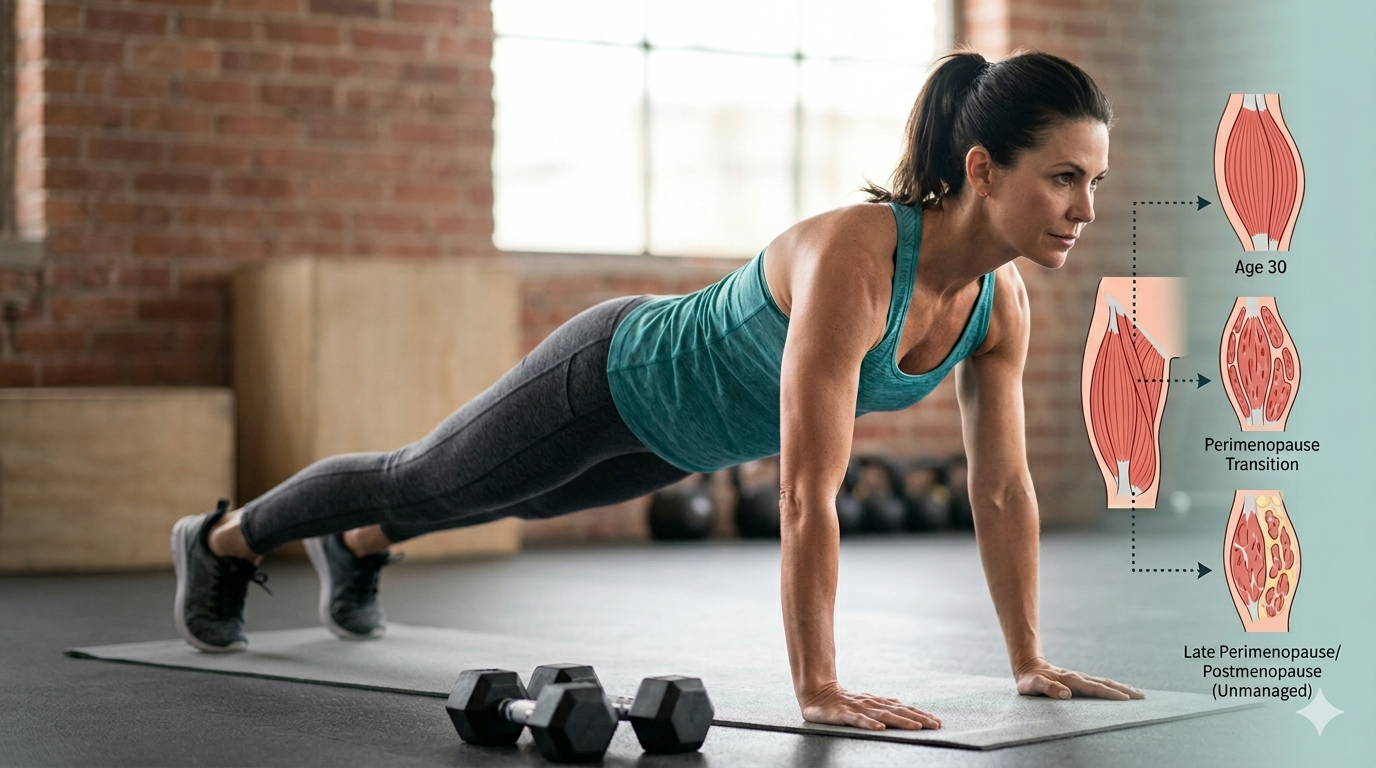
Most people associate muscle loss with old age. But for women, the process begins much earlier, typically from around age 30, and it can accelerate for many women during perimenopause.
Sarcopenia is the gradual loss of muscle mass and strength that happens as we age. It's not dramatic. It's quiet. You don't wake up one day and notice it, you just gradually feel less like yourself.
And here's the part that catches most women off guard: you don't have to be sedentary for it to happen. Being active helps, but hormonal and metabolic changes mean some muscle loss can still occur unless training and nutrition are specifically adjusted for this stage of life.
The Oestrogen Connection
Oestrogen isn't just a reproductive hormone. It plays a significant role in maintaining muscle tissue. It influences how your body builds and repairs muscle, regulating inflammation, and supporting efficient recovery after exercise.
As oestrogen begins to fluctuate and decline in perimenopause, that protective effect diminishes. Hormonal changes make it harder to build and maintain muscle, even when your habits haven't changed at all. This is one key reason many women notice shifts in body composition in their forties despite doing everything "right."
It's not a willpower problem. Hormones are a major piece of the puzzle - alongside other factors like nutrition, sleep, and activity levels - and that's worth understanding.
Why This Matters Beyond the Mirror
Muscle is metabolically active tissue, meaning it burns energy even at rest. Less muscle is linked to reduced resting metabolism, lower strength, less support for bone health, and poorer blood sugar control, which together can affect how energetic and resilient you feel day to day.
In other words, protecting your muscle isn't just about how you look. It's foundational to how you feel, how you age, and how well your body functions for the decades ahead.
What You Can Do About It
The good news? Age-related muscle loss is common, but the extent of it is highly modifiable. You can slow it, and in many cases partially reverse it, with the right approach.
Prioritise protein - more than you think you need. The standard dietary guidelines significantly underestimate protein needs for women at this life stage. Most experts now recommend at least 1.2–1.6g of protein per kilogram of body weight per day to support muscle maintenance and growth. If you're a high-level athlete (training at high intensity multiple times a week), that target rises to 1.6–2g per kilogram. Spreading your intake across meals (rather than loading it all into dinner) helps your body actually use it for repair and synthesis.
Don't fear strength training. Resistance exercise is the most powerful tool you have for preserving muscle through perimenopause. You don't need to become a gym devotee, even two to three sessions per week makes a meaningful difference.
Support your recovery. Sleep, stress management, and adequate overall nutrition all influence how well your muscles repair and grow. Chronically elevated cortisol (driven by persistent stress and poor sleep) actively promotes muscle protein breakdown, making recovery harder and loss faster.
The Bottom Line
Some degree of muscle loss through your thirties, forties, and fifties is common. Its driven by hormonal shifts alongside lifestyle and health factors that are often outside your immediate control.
But how you respond to it? That part is very much within your control.
With the right nutritional strategy and support, you can protect your muscle, support your metabolism, and feel strong in your body for years to come.
Ready to get to the root of what's happening in your body? Book a Health Clarity call Here
Want to go deeper on what your specific weight loss blocks may be? Download my free Metabolism Detective quiz Here