
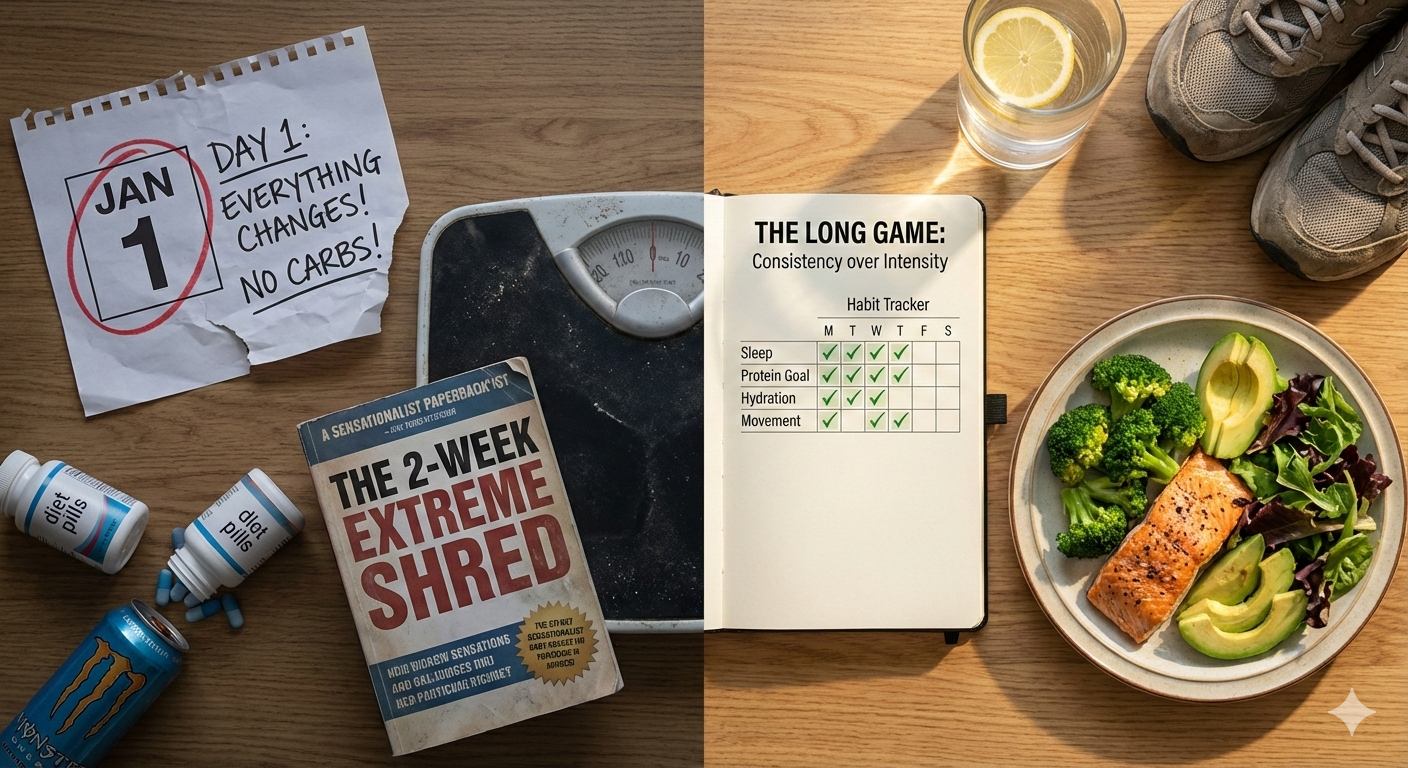
Every January, I see the same thing happen.
Big promises. Extreme rules. "All or nothing" plans.
And by the time February rolls around? Most New Year's resolutions have quietly disappeared.
Sound familiar? You start strong on January 1st, but by week three, you're exhausted, the rules feel impossible, and you're wondering why you can't just stick with it.
Here's what I want you to know: it's not because you're lazy. It's not because you "lack willpower."
It's because most resolutions are unrealistic, unsustainable, and disconnected from how the body actually works — especially if you're a woman over 35 navigating hormonal shifts, a slower metabolism, and energy that doesn't bounce back like it used to.
Maybe you've noticed the same diet that worked in your 20s isn't working anymore. Perhaps you're dealing with energy crashes by 3pm, weight that seems to cling on no matter what you try, or a body that feels like it's working against you instead of with you.
As a naturopath, I don't love New Year's resolutions — particularly when it comes to weight loss after 35 — because they often set people up to fail before they've even begun.
Let's talk about a better way.
The Problem With New Year's Resolutions
Most resolutions sound something like this:
"I'm cutting sugar completely"
"I'm going to exercise every single day"
"I'll lose 10kg by March"
"No carbs, no treats, no slip-ups"
They're ambitious… but they're also short-term, rigid, and driven by pressure, not physiology.
When goals are:
Too extreme
Too many at once
Not aligned with real life
Your nervous system pushes back. Motivation fades. Fatigue sets in. And suddenly, the old habits creep back in — often with guilt attached.
This isn't a mindset failure. It's a strategy problem.
Sustainable Weight Loss Requires Playing the Long Game
Here's what I see again and again in clinic:
The clients who achieve lasting weight loss and better energy aren't the ones who go hardest in January.
They're the ones who:
Make small, realistic changes
Focus on months, not weeks
Work with their hormones, metabolism, and lifestyle — not against them
Health isn't built in a 4-week sprint. It's built through consistent habits repeated over time.
Consistency beats intensity. Every time.
Weight Loss Is a Side Effect of Healthy Foundations
Sustainable weight loss isn't about eating less and pushing harder.
It's the by-product of supporting the body properly across multiple pillars of health — especially blood sugar balance, hormones, stress regulation, and metabolism.
Here are the foundations I encourage clients to focus on instead of rigid resolutions:
1. Eat Real Food (Most of the Time)
You don't need perfection.
Start with:
Reducing ultra-processed foods
Eating meals that actually nourish you
Prioritising whole, colourful foods
Ensuring at least half your plate is non-starchy vegetables
Think leafy greens, cruciferous vegetables like broccoli and cauliflower, and colourful options like capsicum, tomatoes, zucchini, cucumber, mushrooms, asparagus, and green beans. These foods provide fibre, micronutrients, and antioxidants that support digestion, blood sugar balance, liver function, and hormone metabolism — all essential for sustainable weight loss.
Progress over perfection.
2. Aim for Around 30g of Protein Per Meal
Protein is one of the most under-eaten nutrients in women, particularly over 35.
Adequate protein supports:
Blood sugar stability
Appetite regulation
Lean muscle maintenance
A healthier metabolic rate
This one habit alone, done consistently, can dramatically reduce cravings and energy crashes.
3. Stay Hydrated (Yes, It Matters)
Dehydration often masquerades as:
Fatigue
Hunger
Sugar cravings
Headaches
A practical place to start: begin with a small glass of water each hour and gradually build to a larger glass as your body adapts. This helps ensure proper hydration without feeling overwhelming.
Hydration plays a key role in metabolism, digestion, energy production, and appetite signalling.
4. Prioritise Sleep for Hormonal Balance
Poor sleep increases cortisol, disrupts blood sugar, and drives hunger hormones — making weight loss far more difficult.
You don't need perfect sleep. You just need better sleep, more often.
5. Move Your Body in a Sustainable Way
Exercise does not need to be extreme to be effective.
Sustainable movement might include:
Walking most days
Strength training 2–3 times per week
Choosing movement you can maintain long-term
Burnout is not a requirement for results.
6. Address Mindset (Because It's Not "Just Discipline")
Your thoughts influence your nervous system, hormones, and behaviours.
Shifting from:
"I've failed again"
to
"I'm learning what my body needs"
creates physiological safety — and that's when real change begins.
7. Build in Accountability
We are not meant to do this alone.
Support and accountability significantly improve long-term success, especially for women navigating stress, hormonal changes, and metabolic resistance.
This might look like:
Asking a friend or family member to support your long-term changes
Or seeking professional accountability with a health practitioner, such as a naturopath who specialises in this area — this is exactly the kind of support I provide in my practice
Having someone in your corner helps turn good intentions into consistent action.
Forget the Resolution. Build the Routine.
Instead of asking:
"What can I achieve by February?"
Try asking:
"What habits could I realistically maintain over the next 6–12 months?"
When you focus on:
Nourishing your body
Regulating stress
Supporting hormones
Building realistic, repeatable habits
Weight loss becomes a natural outcome, not a constant battle.
I'll be honest with you: this approach takes patience. It won't deliver dramatic results in two weeks. But here's what it will do — it will actually work. And it will keep working, month after month, because you're building something sustainable instead of another short-term fix that leaves you starting over next January.
Ready for a More Sustainable Approach?
If you're tired of starting over every January and want a more personalised, physiology-based approach to weight loss and energy, there are two simple ways to get started:
Download my Metabolism Detective Quiz This free quiz helps identify which metabolic and hormonal factors may be holding your body back — and where to focus first.
Book a no-obligation Discovery Call If you'd prefer personalised support, you can book a free discovery call via the Book Online button on my website to explore whether working together is the right fit.
You don't need another resolution. You need a strategy that works with your body — long term.